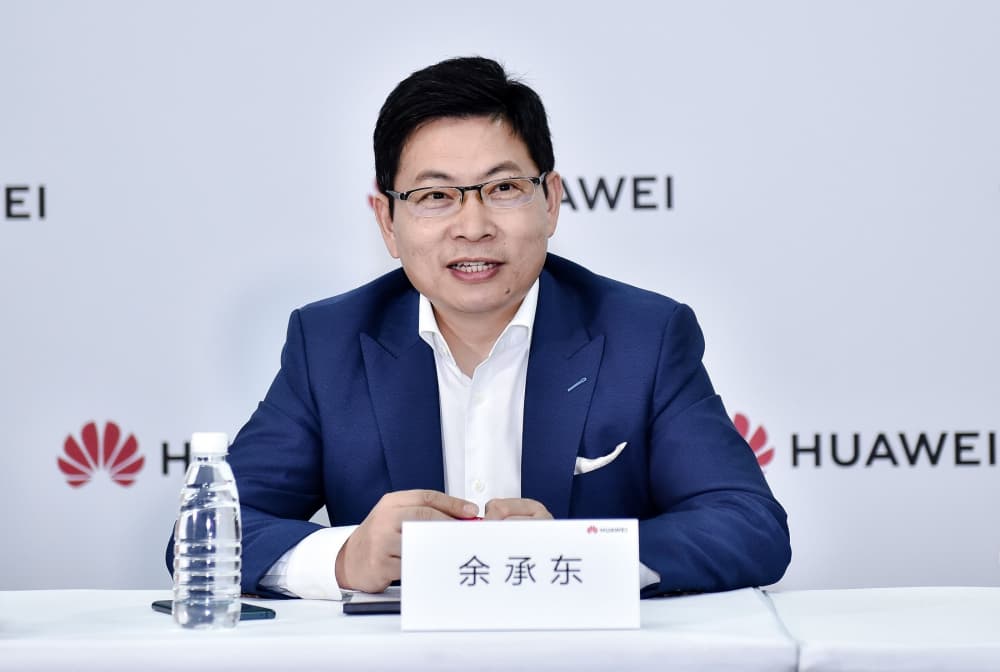
On December 12, 2025, major Chinese technology group Huawei Technologies completed a significant governance restructuring at its consumer terminal subsidiary, Huawei Terminal Co., according to Chinese corporate registration filings. Veteran executive Yu Chengdong formally assumed the role of chairman, replacing former chairman Guo Ping, who stepped down alongside several senior executives including Meng Wanzhou, Xu Zhijun, and Hu Houkun.
As part of the restructuring, Huawei also updated its legal representative and management lineup. Wei Chengmin was appointed legal representative and vice chairman, while He Gang joined the board as a director and general manager. Yang Bo took on the roles of director and chief financial officer, forming a streamlined management team with a stronger focus on frontline business execution.
Yu, born in 1969 and holding a master's degree from Tsinghua University, joined Huawei in 1993 and has held leadership roles across 3G product development, wireless networks, European regional operations, the consumer business group, and smart automotive solutions. His appointment follows a series of operational successes, including leading 4G base station breakthroughs, expanding Huawei's wireless market share in Europe, rebuilding the company's smartphone portfolio under the Mate and P series, and steering the return of flagship devices amid chip supply disruptions. Under his leadership, Huawei's HarmonyOS ecosystem and smart vehicle initiatives have also gained commercial traction.
The leadership change was not an isolated move. In late September 2025, Huawei founder Ren Zhengfei signed an internal directive appointing Yu as head of the company's Product Investment Review Board, granting him authority over project approvals, resource allocation, and budget decisions. Combined with his new chairmanship, Yu now oversees Huawei's core strategic fronts spanning smartphones, intelligent vehicles, and full-scenario AI, consolidating strategic direction, capital deployment, and operational execution.
While Huawei consolidates leadership internally, its European operations face mounting uncertainty. According to a Reuters report citing multiple sources, Huawei is considering selling a newly completed manufacturing facility in eastern France due to slow 5G rollout in Europe and increasingly restrictive government policies toward Chinese telecom equipment.
The factory, first announced in February 2020, was designed to manufacture 4G and 5G wireless equipment primarily for the European market. The project involved an investment of approximately €200 million and was expected to generate annual output of €1 billion and create around 500 direct jobs. The site, located roughly 20 kilometers north of Strasbourg, was completed in September 2025 but remains idle, according to local officials and industry executives.

Huawei's challenges in Europe reflect a broader shift in regulatory sentiment. Since 2018, a growing number of European countries have imposed restrictions or bans on Chinese telecom suppliers, often citing national security concerns. The European Commission has recently moved to strengthen its recommendations into binding requirements, urging member states to gradually remove equipment from so-called high-risk vendors. While some countries continue to allow limited use of Chinese equipment, the overall policy trajectory has become more restrictive.
Industry analysts estimate Huawei's installed base still accounts for roughly 35% to 40% of Europe's 4G and 5G equipment, but growth has slowed significantly. Several sources familiar with the matter said multiple options are under discussion for the French factory, including a potential sale, and that several industrial groups have visited the site. Local authorities have already withdrawn previously approved subsidies due to the project's uncertain outlook.
The situation underscores the contrast Huawei faces at the end of 2025: tighter centralized leadership and resource control at home, alongside shrinking operational room in overseas telecom infrastructure markets. How effectively the company balances internal consolidation with external geopolitical constraints will shape its trajectory across semiconductors, devices, and next-generation communications in the years ahead.
+86 191 9627 2716
+86 181 7379 0595
8:30 a.m. to 5:30 p.m., Monday to Friday


