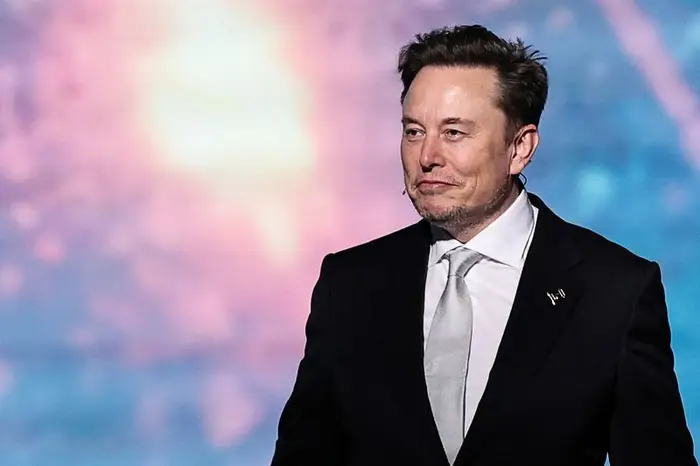
Elon Musk has revealed that Tesla may build a massive in-house chip fabrication facility — dubbed a "Tesla Terafab" — capable of producing up to one million wafers per month to meet the company's growing demand for artificial intelligence (AI) and robotics chips. The comments were made during Tesla's Annual Shareholder Meeting on November 7, 2025, where shareholders also approved Musk's new $1 trillion compensation package over the next decade.
Musk said Tesla is exploring partnerships with Intel Foundry Services while continuing to source chips from its existing suppliers, TSMC and Samsung. "One of the things I am trying to figure out is how do we make enough chips," Musk told attendees. "I have a lot of respect for our partners TSMC and Samsung. Maybe we will do something with Intel. We haven't signed any deal, but it's probably worth having discussions."
The Tesla CEO added that even under the best-case production scenarios from existing suppliers, chip output would still fall short of Tesla's long-term needs. "Even when we extrapolate the best-case scenario for chip production from our suppliers, it is still not enough," he said. "So, I think we may have to do a Tesla Terafab. It is like [TSMC's] Gigafab but way bigger. I cannot see any other way to get to the volume of chips that we are looking for."
According to Musk, the proposed "Terafab" could start with a production capacity exceeding 100,000 wafers per month and eventually reach one million wafers, far surpassing the capacity of current industry leaders. By comparison, TSMC refers to facilities producing over 100,000 wafers per month as "Gigafabs.
TSMC and Samsung to Produce Tesla's AI5 and AI6 Chips
Tesla is currently developing its fifth-generation AI processor, the AI5, to power autonomous driving and robotics applications. Manufacturing of the AI5 is expected to be shared between TSMC and Samsung. Musk said small-scale production will begin in 2026, with full-scale output in 2027. The company's next-generation AI6 chip — expected to deliver double the performance of AI5 — will enter mass production in mid-2028 using the same foundries.
In July 2025, Tesla signed a 22 trillion won ($16 billion) foundry agreement with Samsung to produce the AI6 chips, which will be widely deployed in Tesla's Full Self-Driving (FSD) systems, humanoid robots, and AI data centers. Musk emphasized that the AI6 will be cost-efficient and energy-saving, claiming it will consume about one-third the power of Nvidia's flagship Blackwell GPU while costing just 10% as much to manufacture.
"As you can probably tell, I'm quite obsessed with chips," Musk said with a laugh. "My mind is full of chips."
Intel Shares Rise Following Musk's Remarks
Musk's mention of potential collaboration with Intel gave the U.S. chipmaker a brief stock boost, with shares rising 4% in after-hours trading. Intel, one of the few remaining semiconductor companies with its own advanced fabs, has been aggressively expanding its foundry business amid U.S. government support and private investment.
In August 2025, the U.S. government announced an $8.9 billion investment in Intel, making it the company's largest shareholder with a nearly 10% stake. Intel later secured an additional $2 billion from SoftBank and $5 billion from Nvidia as part of a broader strategic partnership. Intel is currently ramping production of its Intel 18A process technology and developing its next-generation Intel 14A node but has yet to secure external customers for those advanced processes.

Analysts believe a Tesla–Intel collaboration could be mutually beneficial: Tesla would gain technical expertise and production capabilities, while Intel could strengthen its position in the foundry market through co-investment and operational management of the new fab.
Industry Reaction: "Building Advanced Fabs Is Extremely Hard"
Nvidia CEO Jensen Huang, speaking at a TSMC event on November 7, cautioned that building advanced chip fabs is far more complex than it appears. "It is not just build the plant," Huang said. "The engineering, the science, and the artistry of doing what TSMC does for a living is extremely hard."
Indeed, developing a leading-edge process node from scratch takes at least five years and tens of billions of dollars in investment. Japan's Rapidus, for example, has committed ¥5 trillion (approximately $32 billion) to develop and commercialize 2nm chips by 2027 — a project widely seen as a test case for whether newcomers can still enter the elite tier of global semiconductor manufacturing.
While Musk's proposed "Terafab" remains a conceptual vision, his remarks underscore Tesla's growing ambition to become not just an electric vehicle and AI company, but potentially a new force in the global semiconductor landscape.
+86 191 9627 2716
+86 181 7379 0595
8:30 a.m. to 5:30 p.m., Monday to Friday


